
Newborn Jaundice: Causes, Symptoms, Treatment and When to Worry (2026 Parent Guide)
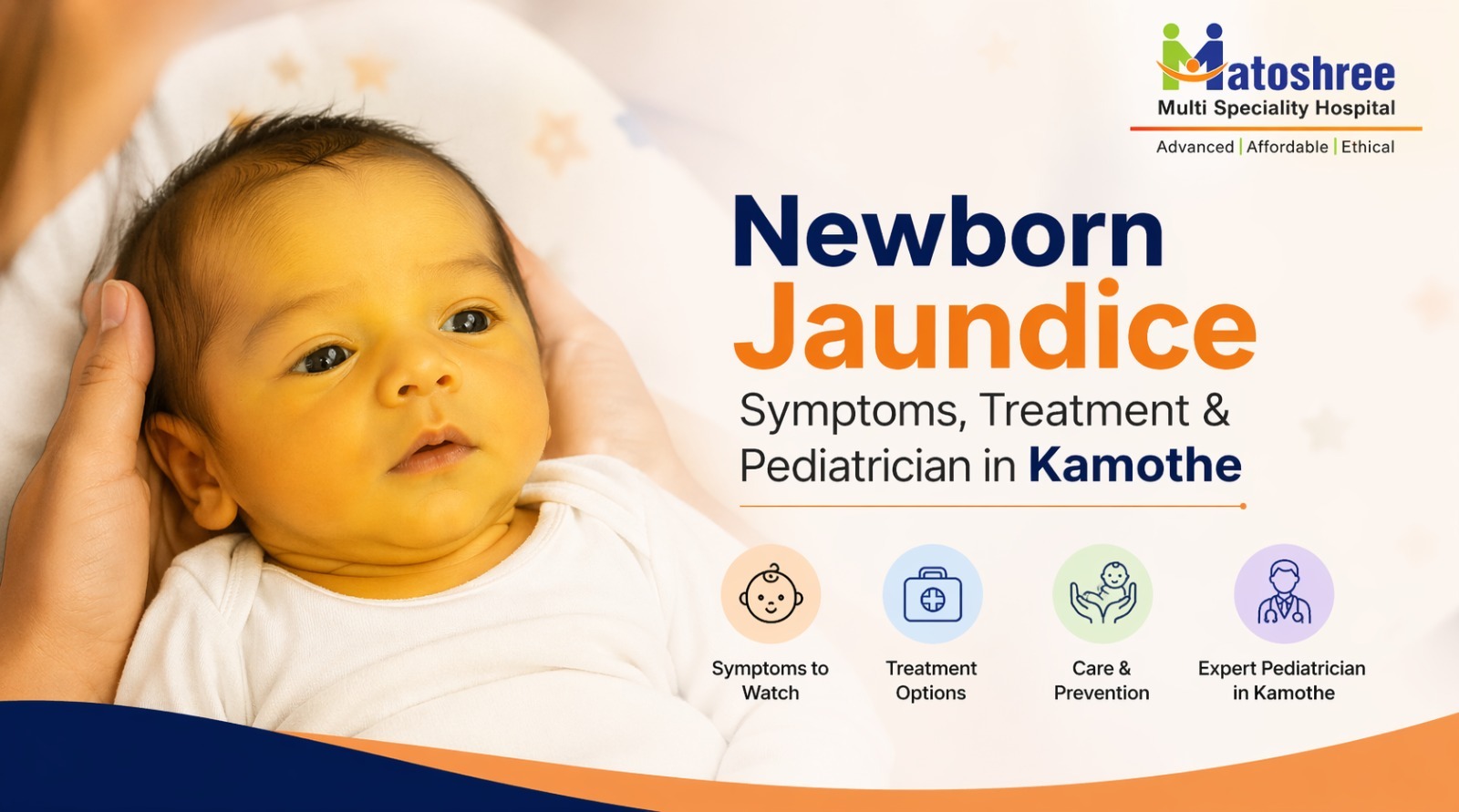
The birth of a child is a happy occasion, but noticing yellowing of your baby’s skin or eyes can be concerning. This condition is known as newborn jaundice and is quite common in the first few days after birth.
In most cases, it is mild and temporary. However, some cases require immediate medical attention. If you notice any jaundice symptoms in your baby, consult a doctor without delay.
This guide explains the causes of jaundice in newborns, symptoms, treatment, prevention, and when parents should consult a trusted pediatrician in Kamothe.
What is Newborn Jaundice?
Newborn jaundice occurs when there is a high level of bilirubin in the baby’s blood. Bilirubin is a yellow substance formed when old red blood cells break down. Since a newborn’s liver is still developing, it may not remove bilirubin efficiently, causing yellowing of the skin and eyes.
Understanding the normal bilirubin range in newborns helps doctors decide whether treatment is necessary.
Is Jaundice in Newborns Common?
Yes, mild jaundice is very common and usually appears between the 2nd and 4th day after birth. It is more common in premature and breastfed babies. Most cases resolve naturally within 1–2 weeks with proper feeding and care.
Newborn Jaundice Causes
Some common causes include:
1. Immature Liver
The baby’s liver may not be fully developed to process bilirubin effectively.
2. Premature Birth
Premature babies have underdeveloped organs, increasing the risk of jaundice.
3. Breastfeeding Jaundice
Insufficient feeding in the early days can reduce bilirubin elimination.
4. Breast Milk Jaundice
Certain substances in breast milk can slow bilirubin breakdown.
5. Blood Group Incompatibility
Different blood types between mother and baby can lead to faster breakdown of red blood cells.
6. Birth Bruising
Bruising during delivery may increase bilirubin levels.
Jaundice Baby Symptoms
Common symptoms include:
- Yellow skin (starting from the face and spreading downward)
- Yellowing of the eyes
- Excessive sleepiness
- Poor feeding
- Weak sucking
- Dark urine
- Pale stools
- Irritability
These symptoms should always be evaluated by a pediatrician.
Signs of Recovery from Jaundice
Parents often ask how to identify recovery. Positive signs include:
- Gradual fading of yellow skin
- Eyes becoming clearer
- Improved feeding
- Increased activity and alertness
- Normal urine and stool color
- Healthy weight gain
- Decreasing bilirubin levels in follow-up tests
If recovery seems slow, consult a doctor.
Normal Bilirubin Range in Newborns
The normal bilirubin range depends on the baby’s age (in hours/days) and whether the baby is full-term or premature. Doctors use bilirubin charts to determine whether observation or treatment is required.
Avoid self-diagnosis—bilirubin levels should always be interpreted by a pediatrician.
How to Prevent Jaundice in Newborns
While not all cases can be prevented, the following steps help:
- Start breastfeeding early
- Feed the baby 8–12 times daily
- Monitor urine and stool output
- Attend newborn follow-up checkups
- Watch for yellowing of skin or eyes
- Discuss blood group compatibility with your doctor
- Ensure proper hydration
When to Worry About Newborn Jaundice
Seek immediate medical attention if:
- The baby refuses to feed
- The baby is difficult to wake
- Yellowing increases rapidly
- Fever develops
- High-pitched crying occurs
- Abnormal movements or stiffness appear
- Jaundice lasts longer than 2 weeks
These may indicate severe jaundice requiring urgent care.
Newborn Jaundice Diagnosis
Doctors diagnose jaundice using:
- Physical examination
- Bilirubin blood test
- Skin bilirubin scan
- Blood group testing
- Additional tests if required
Newborn Jaundice Treatment
Treatment depends on bilirubin levels and the baby’s age:
1. Frequent Feeding
Helps remove bilirubin through stools.
2. Phototherapy
Special blue light helps break down bilirubin safely.
3. IV Fluids
Used when feeding is insufficient.
4. Exchange Transfusion
Used only in severe cases with dangerously high bilirubin.
Trusted Pediatrician in Kamothe
If your baby shows symptoms of jaundice, seek medical care immediately. A trusted pediatrician in Kamothe can monitor bilirubin levels, guide feeding, and provide proper treatment.
Final Thoughts
Newborn jaundice is common and usually harmless, but parents should never ignore worsening symptoms such as increasing yellowing, poor feeding, or excessive sleepiness.
Understanding symptoms, recovery signs, prevention, and normal bilirubin levels helps ensure your baby’s health and safety.
If you notice any symptoms, consult a pediatrician in Kamothe without delay.















 (1).png)