
Hypothyroidism vs Hyperthyroidism: Symptoms, Causes, TSH Levels, T3 & T4 Differences Explained
What Is the Thyroid Gland?
A gland in front of the neck, the size of a little butterfly. It releases thyroid hormones (T3 and T4) which control body temperature, energy production, heart rate and other important functions of the body. Thyroid disorders are the result of an insufficient or excessive production of thyroid hormones.
Hypothyroidism and hyperthyroidism are the two most common thyroid disorders. Both can impact the thyroid gland, but in opposite ways. Recognizing the difference may enable you to catch symptoms early and get timely medical attention.
What Is Hypothyroidism?
Hypothyroidism is a situation where the thyroid gland doesn't generate enough thyroid hormones. This consequently lowers the body's metabolism, which impacts a number of organs and bodily functions.
Symptoms of Hypothyroidism
- Fatigue and weakness
- Weight gain
- Dry skin
- Loss or thinning of hair.
- Feeling cold frequently
- Constipation
- Depression
- Puffy face
- Slow heart rate
- Muscle weakness
- Heavy, or abnormal, periods.
- Difficulty concentrating
Hypothyroidism, if not treated, will cause these symptoms. eaten, can cause more serious health issues, such as high cholesterol, heart disease, infertility and myxedema.
What Is Hyperthyroidism?
Hyperthyroidism is when the thyroid gland makes more thyroid hormones than is needed. This helps to accelerate the body's metabolism and impacts the digestive system, nervous system, and heart.
Symptoms of Hyperthyroidism
- Unexplained weight loss
- Rapid heartbeat
- Anxiety and nervousness
- Excessive sweating
- Heat intolerance
- Tremors
- Increased appetite
- Frequent bowel movements
- Difficulty sleeping
- Muscle weakness
- Bulges in the eyes (Graves' disease)
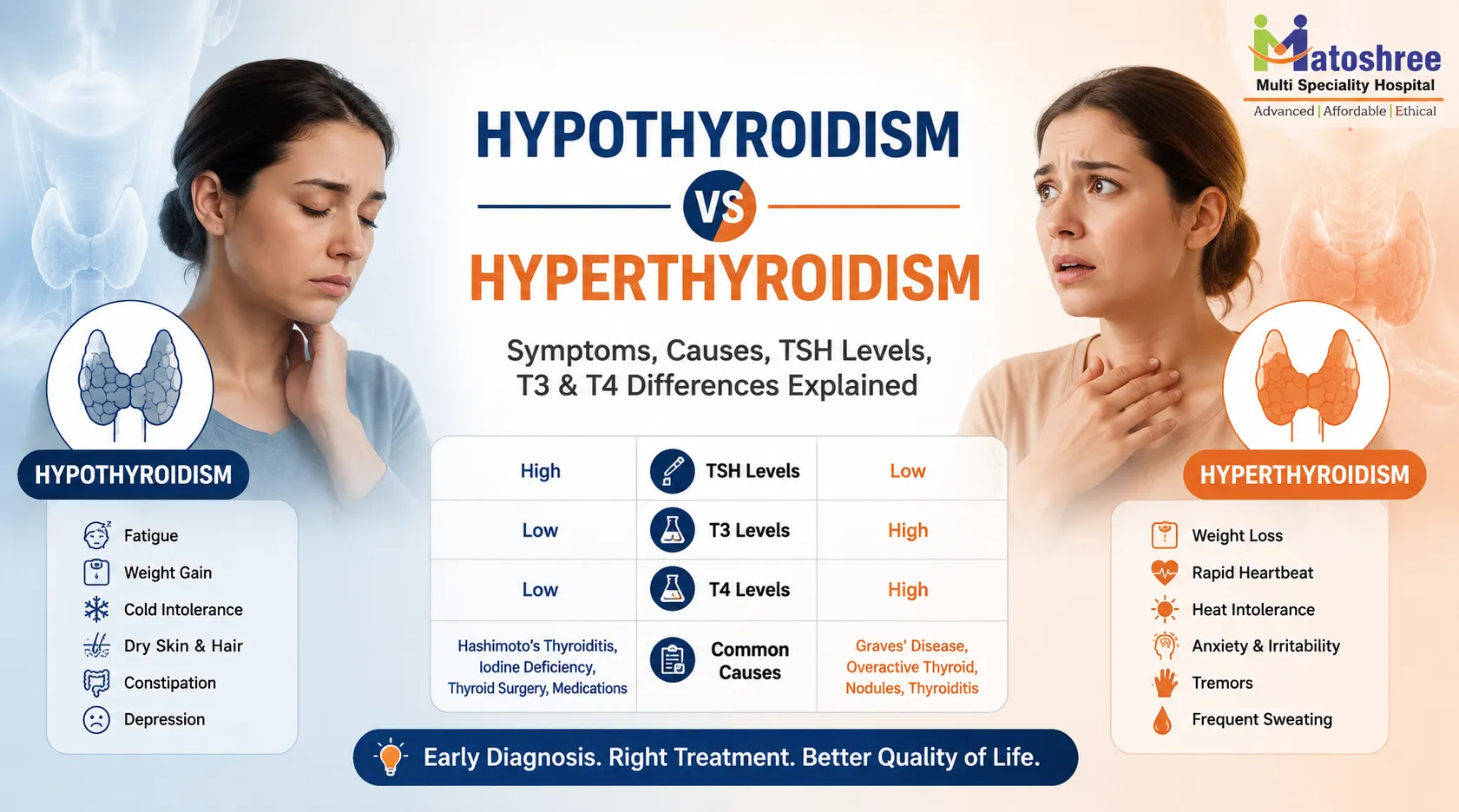
Hypothyroidism and Hyperthyroidism: A quick comparison!
Thyroid Function
- Hypothyroidism: Underactive thyroid gland
- Hyperthyroidism: Overactive thyroid gland
Metabolism
- Hypothyroidism: Slower metabolism
- Hyperthyroidism: Faster metabolism
Body Weight
- Hypothyroidism: Weight gain is common
- Hyperthyroidism: Unexplained weight loss is common
Heart Rate
- Hypothyroidism: Slow heart rate (bradycardia)
- Hyperthyroidism: Rapid heart rate (tachycardia)
Temperature Tolerance
- Hypothyroidism: Increased sensitivity to cold
- Hyperthyroidism: Increased sensitivity to heat
Energy Levels
- Hypothyroidism: Fatigue and low energy
- Hyperthyroidism: High energy initially, often followed by tiredness
Mood Changes
- Hypothyroidism: Depression, sluggishness, and brain fog
- Hyperthyroidism: Anxiety, irritability, and nervousness
TSH Levels
- Hypothyroidism: TSH levels are usually high
- Hyperthyroidism: TSH levels are usually low
T3 & T4 Levels
- T3 (Triiodothyronine) is the active thyroid hormone that regulates metabolism.
- T4 (Thyroxine) is converted into T3 by the body and helps maintain normal body
Causes of Hypothyroidism
Common causes include:
- Hashimoto's thyroiditis
- Iodine deficiency
- Thyroid surgery
- Radiation therapy
- Certain medications
- Congenital thyroid disorders
- Pituitary gland disorders
Common causes include:
- Graves' disease
- Thyroid nodules
- Thyroiditis
- Excess iodine intake
- Taking too much thyroid hormone medicine
Understanding TSH Levels, T3 and T4.
A thyroid function test is the most commonly requested test for thyroid disorders and measures levels of TSH, T3 and T4.
What Is TSH?
TSH (thyroid-stimulating hormone) is made by the pituitary gland and instructs the thyroid gland to make hormones.
- High TSH levels generally indicate hypothyroidism.
- Low TSH levels usually indicate hyperthyroidism.
What Are T3 and T4?
- High TSH levels generally indicate hypothyroidism.
- Low TSH levels usually indicate hyperthyroidism.
The doctor takes all three values into account when making a diagnosis.
T3 and T4 Normal but TSH High – What Does It Mean?
A lot of people get thyroid test results that indicate normal T3 and T4 levels and elevated TSH levels. This is known as subclinical hypothyroidism.
At this point, thyroid hormone production is adequate, but more TSH is secreted by the pituitary gland to maintain normal thyroid function.
Although some may not have symptoms, others may have:
- Mild fatigue
- Weight gain
- Hair fall
- Dry skin
- Constipation
- Low energy
It is critical to monitor TSH levels regularly since subclinical hypothyroidism can develop into overt hypothyroidism if not addressed.
Hypothyroidism: T3, T4, and TSH Levels Explained
Doctors can accurately diagnose thyroid disorders if they understand T3 and T4 levels and TSH levels.
TSH (Thyroid Stimulating Hormone):
- Usually high, as the pituitary gland produces more TSH to stimulate the underactive thyroid.
T3 (Triiodothyronine):
- Usually low or within the normal range, especially in the early stages of hypothyroidism.
T4 (Thyroxine):
- Usually low or within the normal range, depending on the severity of the condition.
In hypothyroidism, the T4 and T3 levels can be normal but the TSH level will be elevated. As the condition progresses, T3 and T4 levels may decrease.
How Are Thyroid Disorders Diagnosed?
Your doctor may suggest:
- Physical examination
- Medical history
- TSH blood test
- Free T3 and T4 test
- Thyroid antibody test
- Thyroid ultrasound (if necessary).
The sooner the disease is diagnosed, the sooner you can prevent long-term complications.
Treatment Options
Hypothyroidism Treatment
The treatment typically consists of thyroid hormone replacement drugs. TSH levels must be monitored with regular blood tests and the dosage adjusted accordingly.
Hyperthyroidism Treatment
Treatment will depend on the underlying cause and may involve the following:
- Anti-thyroid medicines
- Radioactive iodine therapy
- Beta-blockers
- Surgical treatment (severe cases)
Please always seek medical advice before beginning or discontinuing thyroid hormone treatment.
When Should You See a Doctor?
- Persistent fatigue
- Unusual weight changes, such as sudden weight gain or weight loss.
- Hair thinning
- Irregular periods
- Shortness of breath and/or palpitations
- Feeling very cold or hot
- A history of thyroid disease in the family.
- If thyroid tests are abnormal.
Early diagnosis and treatment will improve lives and decrease the chances of complications.
Consult a Thyroid Specialist at Matoshree Hospital, Kamothe.
Do not dismiss symptoms of hypothyroidism, abnormal TSH levels, or reports showing T3 and T4 normal but high TSH. The earlier a diagnosis is made, the lower the risk of long-term health complications.
Matoshree Hospital is a trusted thyroid hospital in Kamothe, offering comprehensive thyroid evaluation, TSH, T3 & T4 testing, accurate diagnosis, and personalized treatment. As a leading thyroid hospital in Kamothe, we have an experienced medical team dedicated to providing the right diagnosis and effective treatment for every type of thyroid disorder.
Schedule an appointment today at Matoshree Hospital Kamothe and take the first step towards a healthier thyroid.
Frequently Asked Questions
Is hypothyroidism more common than hyperthyroidism?
Yes. Hypothyroidism is more prevalent, particularly in females and elderly people.
Can T3 and T4 be normal but TSH high?
Yes. This is known as subclinical hypothyroidism. TSH levels can be monitored regularly to help determine if treatment is necessary.
What are normal TSH levels?
A TSH level around 0.4 mIU/L to 4 mIU/L is considered normal, but this may be different in different laboratories.
Can thyroid disorders affect fertility?
Yes. If not treated, hypothyroidism or hyperthyroidism can cause irregular ovulations, cycles, and fertility.
Conclusion
While thyroid disorders are two separate conditions, hypothyroidism and hyperthyroidism have opposing effects on the body. Knowing the results of your TSH, T3, and T4 level tests can help you identify thyroid issues early so you can receive timely treatment. If you are experiencing symptoms of fatigue, unexplained weight loss, hair loss or your report shows normal T3 and T4 normal but TSH high , seek proper evaluation from your healthcare provider.
You can attain lifelong thyroid health by getting expert thyroid diagnosis, advanced testing and treatment at Matoshree Hospital, Kamothe.




















 (1).png)