
Home Remedies for Low BP in Pregnancy: Causes, Symptoms & What to Eat?
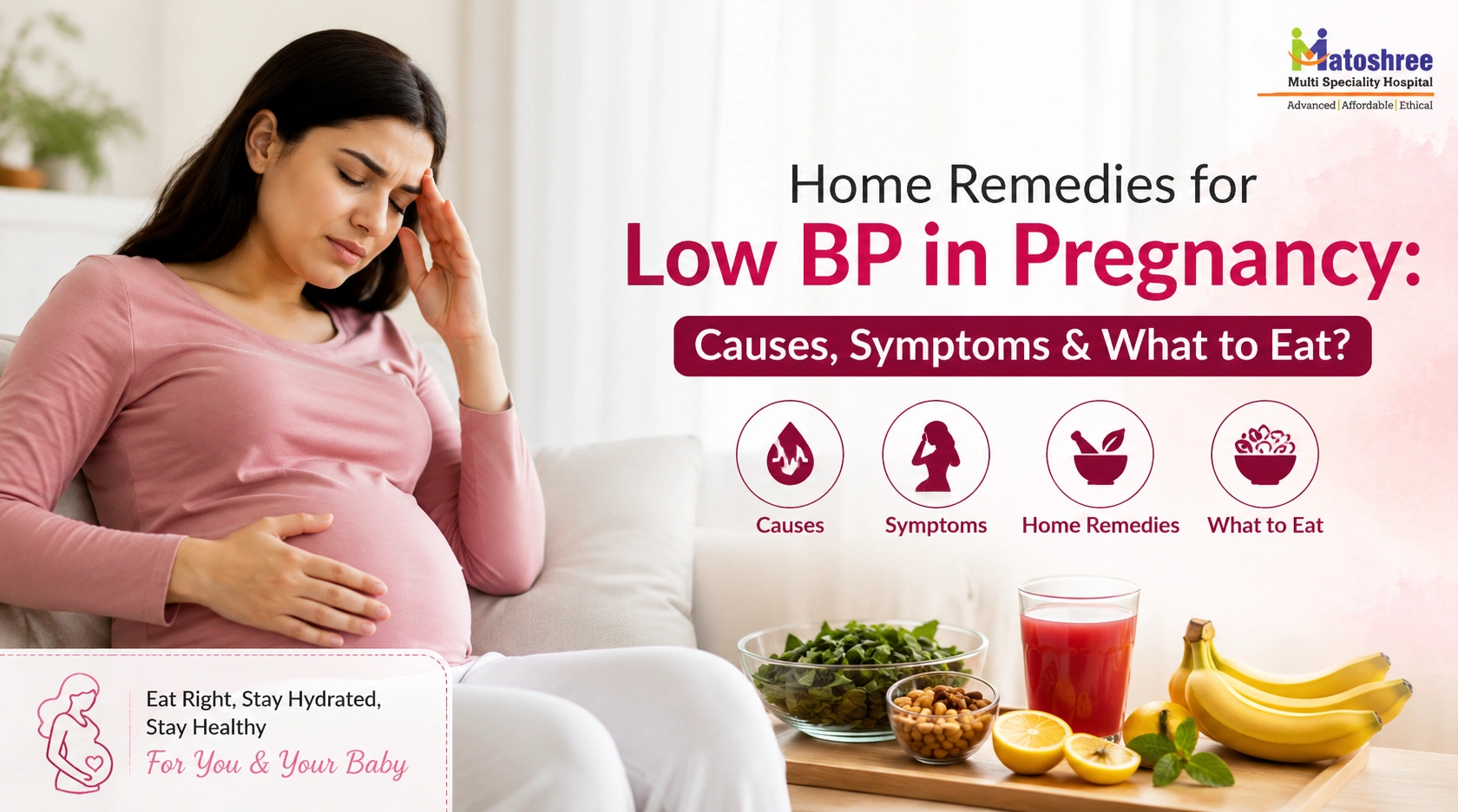
Home Remedies for Low BP in Pregnancy
Low BP in pregnancy or low blood pressure during the pregnancy is a common condition particularly during early and mid pregnancy. BP low in pregnancy can be due to hormonal changes, increased blood flow causing dizziness, weakness, fatigue and sometimes fainting. If a woman experiences low blood pressure in pregnancy, it is usually not serious, but if it is, it should not be overlooked.
Having a good idea of what causes low blood pressure, its signs and symptoms, home remedies and tips about what to eat for low blood pressure, will help you manage low BP safely and help you achieve a healthy pregnancy.
What is Considered Low Blood Pressure During Pregnancy?
A normal blood pressure reading is around 120/80 mmHg. If a blood pressure is less than 90/60 mmHg, it is typically low blood pressure in pregnancy.
Low BP in pregnancy is a common complaint due to the pregnancy hormones which cause the blood vessels to relax, leading to higher levels of blood flow to the uterus. If a woman has low blood pressure during pregnancy, usually it gets better on its own in the third trimester.
Causes of Low BP in Pregnancy
Low blood pressure during pregnancy may be caused by:
- Hormonal changes
- Increased blood circulation
- Dehydration
- Morning sickness and vomiting often.
- Anaemia
- Standing for extended periods of time.
- Nutritional deficiencies
- Certain medications
- Cardiac or thyroid problems
An awareness of these causes may help to decrease the incidence of BP low in pregnancy.
Low Blood Pressure During Pregnancy Symptoms
Symptoms of low blood pressure are:
- Dizziness or lightheadedness
- Weakness
- Fatigue
- Blurred vision
- Nausea
- Headache
- Fainting
- Cold, clammy skin
- Difficulty concentrating
If BP is low in pregnancy, and these symptoms become common or severe, see your obstetrician right away.
8 Safe Home Remedies for Low BP in Pregnancy
1. Stay Well Hydrated
The simplest way to control low blood pressure during pregnancy is to drink lots of water. Drinking coconut water, fresh fruit juices, soups and hydration fluids (electrolytes) can keep the blood volume balanced and avoid dehydration.
2. Eat Small, Frequent Meals
Instead of three large meals, eat smaller meals every 3–4 hours. This helps keep blood sugar level constant and helps ease symptoms of low blood pressure in pregnancy.
3. Include Iron-Rich Foods
Low blood pressure is exacerbated by iron-deficiency in pregnancy. Include:
- Spinach
- Lentils
- Beans
- Eggs
- Lean meat
- Dry fruits
Follow your doctor's advice for taking iron supplements.
4. Eat more salt (only if it is advised to increase salt intake).
If your BP is low in pregnancy, you may be advised to take in a bit more salt. Don't add salt to food without a doctor's prescription.
5. Change Positions Slowly
Don't get up quickly from a sitting or lying position because this can lead to dizziness related to low BP during pregnancy.
6. Sleep on Your Left Side
You may find sleeping on your left side more comfortable and beneficial to blood flow to the womb and lower blood pressure during pregnancy.
7. Wear Comfortable Clothing
Loose clothing allows better circulation and decreases discomfort. Your doctor may suggest wearing compression stockings.
8. Gentle Physical Activity
Exercise with low impact, such as light walking, prenatal yoga and safe pregnancy stretching can enhance blood circulation and assist to control low blood pressure during pregnancy as long as medical clearance is obtained.
Low BP in Pregnancy: What to Eat?
If dizziness and low BP in pregnancy: what to eat is a problem, here are a few tips on how to achieve a healthy blood pressure level by eating the right foods.
Add these foods to your meal plan:
- Bananas
- Coconut water
- Whole grains
- Dairy products
- Leafy green vegetables
- Nuts and seeds
- Eggs
- Lean chicken
- Fish
- Citrus fruits
- Lentils and beans
- Foods that are high in iron, such as spinach, dates and other foods.
Balanced diet, drinking plenty of fluids and eating small meals are the best ways to treat low blood pressure in pregnancy naturally.
When Should You See a Doctor?
If you have low blood pressure during pregnant, it's typically not a permanent condition, but if you have any of these symptoms, please contact your doctor or midwife right away:
- Severe dizziness
- Repeated fainting
- Heavy vaginal bleeding
- Severe abdominal pain
- Chest pain
- Difficulty breathing
- Persistent vomiting
- Reduced fetal movements
Low BP in pregnancy should always be investigated to make sure mother and baby are healthy.
Can Low Blood Pressure During Pregnancy Affect the Baby?
Low blood pressure is not a problem for the baby if it's mild. If low blood pressure is low or severe, however, it can cause a reduction in blood flow to the placenta throughout pregnancy, which could lead to low birth weight, poor fetal growth, or preterm births, if untreated. Regular checkups during pregnancy can identify and control these risks early.
Frequently Asked Questions
Is low BP in pregnancy normal?
Yes. Low BP is a frequent occurrence in the first trimester and second trimester of pregnancy related to the hormonal and circulatory changes.
Low BP in pregnancy: What to eat?
When looking into what foods to eat for low BP in pregnancy, try to eat those that are high in iron, high in leafy green vegetables, bananas, whole grains, dairy products, coconut water, nuts, seeds, and a lot of fluids.
What is the fastest way to improve BP low in pregnancy?
For BP low in pregnancy, drink water, rest on left side, eat healthy snack, avoid sudden standing, adhere to doctor's diet advice and improve your BP naturally.
Can dehydration cause low blood pressure during pregnancy?
Yes. Low blood pressure can often be caused by dehydration, which is common during pregnancy. Staying well hydrated during the day will help you to maintain healthy blood pressure.
Conclusion
Low blood pressure in pregnancy typically is temporary. Low blood pressure is manageable for most women during pregnancy if they are hydrated, eat healthy foods, rest enough and have healthy lifestyle habits. Understanding what to eat, the signs of low BP at an early stage and when to get medical advice can help to make your pregnancy safe and healthy for you and the baby.
Get Safe & Compassionate Pregnancy Care at the Best Maternity Hospital in Navi Mumbai
You need the best care for your pregnancy, at every stage. We offer full maternal care at Matoshree Multispeciality Hospital, such as prenatal care, monitoring, normal delivery, painless delivery, high-risk pregnancy management, c-section care and post natal care. The advanced medical technology, experienced obstetricians, skilled pediatricians and 24/7 emergency care provide the utmost safety and comfort to mother and baby.
Looking for the Best Maternity Hospital in Navi Mumbai? Opt for Matoshree Multispeciality Hospital for compassionate care, tailored treatment plans, and expert guidance on the journey of pregnancy. Contact us now for a consultation and discover first-class maternity services that will ensure you and your baby are kept healthy throughout. You are on your way to safe motherhood.

















 (1).png)