
Dengue Fever in Children: Symptoms, Warning Signs, Treatment & Prevention (2026 Guide)
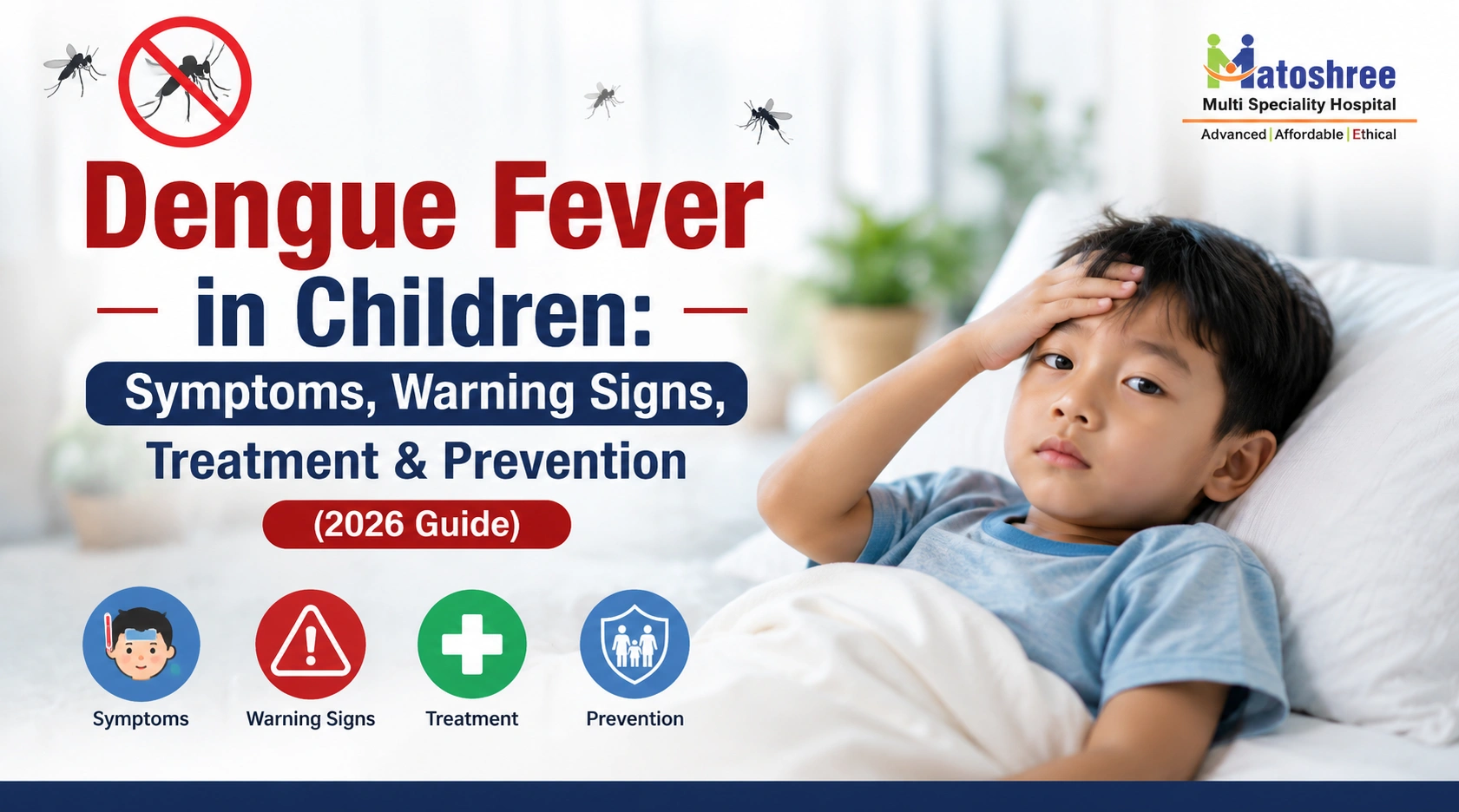
Dengue fever in children is a common mosquito-borne viral infection which is more prevalent during monsoons. Early diagnosis of children with dengue is important, as early treatment can prevent complications. Treatment and fluid replacement are most important, and many children will get better with these, but some children may develop very severe dengue that will need urgent hospitalisation.
This manual covers the pathogenesis, clinical manifestations of dengue fever symptoms in kids, diagnosis, treatment, prevention and when parents should seek immediate medical attention.
What is Dengue Fever?
The dengue virus causes Dengue fever and transmission occurs from an infected Aedes aegypti mosquito. They tend to feed during the day and are found in clean, still water such as buckets, flower pots, coolers, water tanks and old tyres.
Dengue is not directly caused by human-to-human transmission.
Why Are Children More at Risk?
Children are more susceptible to dengue because of the following:
- They have an immature immune system.
- They play outside more.
- Young children may not be able to explain their symptoms.
- They tend to dry out more easily than adults.
A parent's awareness of the early signs and dengue symptoms for kids can enable them to seek treatment early enough to prevent the disease from becoming serious.
Dengue Symptoms in Kids
Children typically get sick with dengue symptoms in kids 4-10 days after being bitten by a mosquito. Symptoms can vary from mild to severe.
Kids may experience the following dengue fever symptoms:
- High fever (up to 104°F or 40°C)
- Severe headache
- Occasional, dull pain in the back of the eye(s).
- Joint and muscle pain.
- Skin rash
- Nausea and vomiting
- Loss of appetite
- Fatigue
- Irritability in younger children.
If you see any of these dengue symptoms in child, please see a pediatrician immediately.
Warning Signs of Severe Dengue
For some children, the fever may begin to subside, but they still end up suffering from severe dengue. This is called the critical phase and needs to be treated right away.
If your child has any of these symptoms, get emergency help:
- Severe abdominal pain
- Persistent vomiting
- Difficulty breathing
- Gums that bleed or bleed from the nose.
- Blood in stool or vomit
- Extreme weakness
- Cold or clammy skin
- Excessive sleepiness
- Reduced urine output
When signs and dengue symptoms in kids are overlooked, they can actually be at a higher risk of developing serious complications.
How is Dengue Diagnosed?
Dengue fever is diagnosed in children by a physical exam and blood tests, such as:
- Blood tests, such as complete blood count (CBC).
- Platelet Count
- Hematocrit
- NS1 Antigen Test
- Tests for Dengue IgM and IgG Antibodies.
Children are routinely tested to check for recovery and early signs of complications.
Treatment for Dengue Fever in Children
At present, there is no specific antiviral drug for dengue. Treatment is aimed at controlling symptoms and preventing complications.
Doctors usually recommend the following:
Hydration
Encourage your child to drink:
- Water
- ORS
- Coconut water
- Fresh fruit juices
- Clear soups
One of the key components of dengue treatment is proper hydration.
Fever Control
Paracetamol is a drug that is generally used to bring down temperatures.
Avoid giving:
- Aspirin
- Ibuprofen
- Diclofenac
These medications may make you more likely to bleed.
Rest
Rest as much as possible until you are totally recovered.
Hospital Care
The child may need to be admitted to a hospital if they have the following:
- Severe dehydration
- Persistent vomiting
- Bleeding
- Low blood pressure
- Difficulty breathing
Foods to Eat During Dengue Recovery
Eating a healthy diet helps you get better faster.
Recommended foods include:
- Fresh fruits
- Papaya
- Pomegranate
- Bananas
- Khichdi
- Dal
- Rice
- Vegetable soup
- Coconut water
- Curd (if tolerated)
Until your child is fully recovered, avoid oily, spicy, processed, and junk food.
How to Prevent Dengue in Children
To minimize the risk of dengue, parents can also take these preventive measures:
- Get rid of unused water in your home.
- Cover water storage containers.
- Apply mosquito repellent that is appropriate for children.
- Have children wear full length clothing.
- Install window screens.
- Use mosquito nets when sleeping.
- Maintain cleanliness in the area.
The best way to protect children from dengue is to prevent it.
When Should You Visit a Doctor?
If your child has any of the following, talk to your child's doctor right away:
- Temperatures that have persisted for more than 2 days.
- Persistent vomiting
- Rash with fever
- Poor fluid intake
- Spitting up red or bloody urine, or nose bleeding.
- Severe abdominal pain
- Difficulty breathing
- Extreme tiredness
Early diagnosis of dengue fever in children can have a positive impact on the recovery process and lower the chances of complications.
Frequently Asked Questions (FAQs)
Can dengue be dangerous for children?
Yes. Dengue is a severe illness when not treated properly. Early diagnosis and adequate medical treatment greatly improve outcome.
How long does dengue last in children?
Most children get better 7-14 days later, but they may be weak for a few weeks.
Can children get dengue more than once?
Yes. There are four types of dengue virus, so a child may become infected more than once.
Is dengue contagious?
Dengue is not transmitted from person to person but rather by a mosquito carrying the virus.
What should parents do if they notice dengue symptoms in kids?
Please always ask a paediatrician first. Avoid self-medication and make sure that the child is well hydrated and is following medical directions.
Conclusion
If diagnosed in time, the treatment of dengue fever in children can be managed successfully. Being aware of the signs and symptoms of dengue in children and timely medical attention can help prevent severe dengue. In the monsoon season, child protection against mosquito bites and good hygiene are the most effective ways to minimize the risk of infection with dengue.
Don't dismiss signs of high fever, rash, vomiting and other dengue symptoms in kids – seek medical attention. The earlier the diagnosis is made and treatment is initiated, the less likely there will be complications and the quicker there will be a recovery.
At Matoshree Multi speciality Hospital, Kamothe, the highly qualified paediatricians and neonatologists are able to provide comprehensive treatment to the children, newborn and infants. suffering from Dengue. Advanced laboratory testing, hydration therapy, continuous monitoring and supportive treatment are all given to your child, ensuring the highest standard of medical care. Our child care and neonatal care team is dedicated to the care of all children in a safe, compassionate and personal manner.
Talk to the Best Pediatrician and Neonatologist Kamothe Today!
Avoid waiting until the symptoms get worse. In case your child is facing dengue fever symptoms in kids, Dengue symptoms, Dengue symptoms for children or any Dengue symptoms in children, please visit Matoshree Multispeciality Hospital to get timely evaluation and expert medical care.
Please make an appointment with the Best Pediatrician and Neonatologist in Kamothe today! If diagnosed early and treated on time, treatment could be the most important factor in your child's recovery. Let our experienced paediatric doctors take care of your child in the right and proper manner, allowing the child's quick recovery with utmost safety.



















 (1).png)