
What Mothers Should Know About 9 Month Pregnancy Exercises for Normal Delivery?
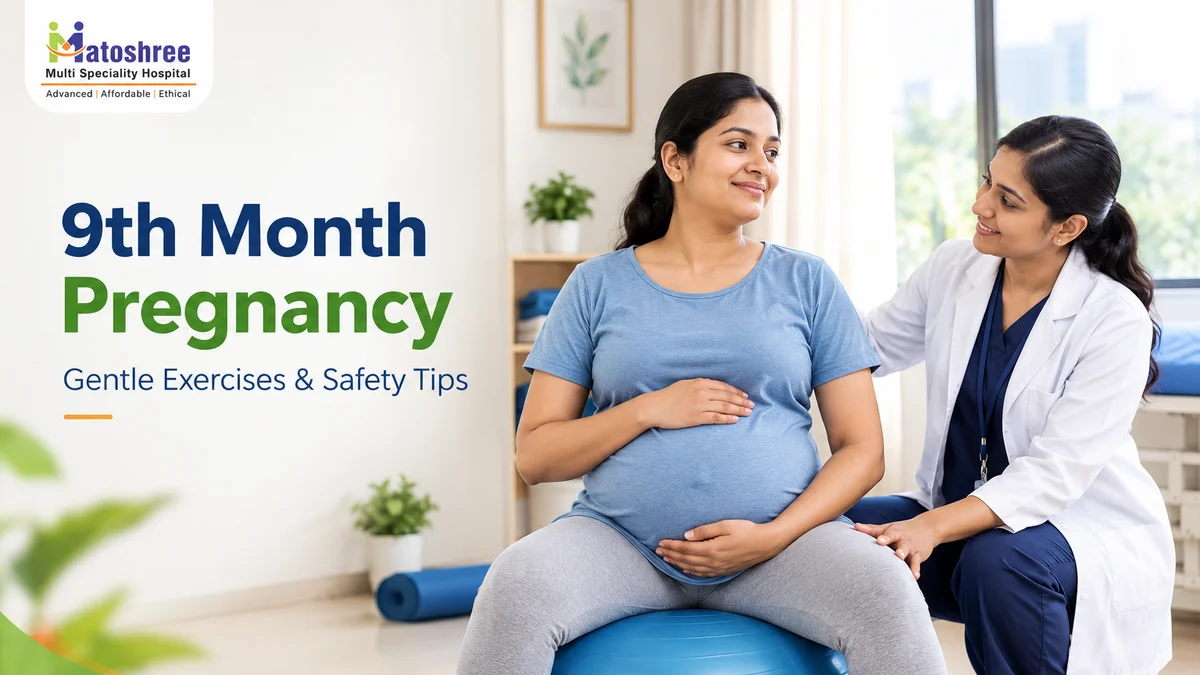
As time moves on towards your due date, you may find yourself thinking about labour, birth, and how you can be prepared. You might be wondering about the best exercises for normal delivery, if walking is sufficient, or whether you can stretch a bit to help in the last few weeks of pregnancy.
The 9th month may be a time of stress and excitement. Things that used to be easy for you may now feel different, and you may be feeling a backache, tiredness or unable to get into the sleeping position of your choice.
Fortunately, there are activities some women can still do in their uncomplicated pregnancies in this stage. But the right strategy will be different, depending on how healthy you are, your baby's health, and your physician's recommendations. If you can get the proper care of your mothers, you can talk to your healthcare provider about what you can and can't do during your pregnancy.
We will talk about some soft movements that might be appropriate for some women in the 9th month and some precautions to note.
What about exercising in the 9th month of pregnancy?
With uncomplicated pregnancies, women can benefit from light exercise when their doctor says it is OK. It can also assist in keeping you limber, help alleviate some of the common discomfort associated with pregnancy, and improve overall fitness.
The last month, though, is not the time to take a big chance on a difficult workout or attempt a workout you've never done before.
Some activities may be restricted or contraindicated if you are experiencing complications of pregnancy, bleeding, leakage of amniotic fluid, signs of labour, or another medical issue.
Just do not think that if you exercise you will ensure a normal delivery. Your baby's positioning, your health and the progress of labour all have a role to play in determining what the safest mode of delivery will be.
In case you are not sure about what activities you should engage in, ask a qualified gynaecologist at your next antenatal check-up to talk about an exercise plan for your pregnancy.
Before starting any exercise program, talk with your doctor about these 5 gentle exercises.
1. Walk at a comfortable pace
Walking is one of the easiest activities to do during pregnancy. After discussing the situation with your doctor, a brisk walking program can be a simple way for you to continue your normal mobility without an overly complex exercise program.
How to approach it:
- Choose a flat, familiar, and safe walking route.
- Wear comfortable shoes that provide good support.
- Pace yourself and walk at a comfortable speed, not attempting to go faster or further.
- Rest and keep hydrated when tired.
Walking is good for fitness but does not ensure labour will start or a vaginal delivery will occur.
2. Gentle Pelvic Tilts
As your baby develops, you may experience more pressure on your lower back. Some women find gentle pelvic movements helpful to alleviate discomfort and to become more aware of their posture.
How to approach it:
Inquire with your prenatal physiotherapist or obstetrician how to perform a good supported standing or hands and knees position. Move slowly and do not move into a position that will cause pressure, pain, or discomfort.
It is a mistake to make big movements. The goal is not to stretch as far as possible; it's about moving within a comfortable range of motion, not trying to get it as far as you can.
3. Supported Sitting on a Birth Ball
Some women may find sitting upright to be more comfortable during the late stages of pregnancy and may find that a size-appropriate birth ball is beneficial. Using gentle movements of the pelvis while seated can also promote movement.
How to approach it:
- Always use a stable ball on a non-slip surface.
- Do not lift your feet off of the ground.
- If okayed by your maternity team, make small and controlled movements.
- Use a support person if you think you will be at risk of falling.
Prevent intense jumping and uncontrolled movements. Stop and select a supported position that is safer if you feel unstable.
4. Gentle Prenatal Stretching
Your hips, back, and legs may feel tight during your pregnancy, particularly if you have been sitting or lying down for extended periods of time. You may be able to keep moving comfortably with gentle stretching.
How to approach it:
Slow movements; breathe normally. Do not overstretch, overtwist, over twist or attempt to reach an uncomfortable position.
If you have any kind of pain, dizziness or unusual discomfort in the pelvis, discontinue the exercise. A prenatal physiotherapist will be able to assist you when selecting movements appropriate for you.
5. Breathing and Relaxation Exercises:
Childbirth preparation isn't just about moving around. Sometimes this includes learning relaxation and stress management techniques as the labor process nears.
It can be helpful to practise staying calm and focused by performing some gentle breathing techniques when you're worried about the birth.
How to approach it:
Sit in a comfortable position with your back supported. Take in and exhale air in a natural, relaxed, and slow manner, keeping shoulders and jaw relaxed. Do not take a deep breath or hold your breath.
Your obstetrician or childbirth educator will be able to explain some breathing methods that might be helpful during labour.
Exercise routines that should not be begun unless advised by a medical professional.
There are certain pregnancy exercise movements that are not fine for all women, particularly in the final weeks.
Your doctor may suggest that you refrain from certain strenuous activities, heavy lifting, strenuous workouts, squatting deeply or exercises requiring unsupported balance in order to make sure your condition does not worsen.
Don't try new exercises either, as this may start to make the birth difficult. Don't use exercise as a substitute for a medical evaluation if you believe labour has begun or if you observe worrisome signs.
If you have been identified as a high-risk pregnancy, get a personal activity plan from your obstetrician before engaging in or resuming activity.
Do exercise really help you to deliver normally?
Although exercise can help keep you fit and mobile while you're pregnant, it does not guarantee a normal vaginal birth. Knowing what to expect during labour can help make you more prepared for the experience. Read our normal delivery procedure step by step of childbirth.
It is a frequent inquiry that comes from pregnant women, especially when the baby's delivery date is nearing.
Appropriate physical activity may help maintain fitness and mobility during pregnancy. There is no exercise, however, that can ensure a normal vaginal delivery.
The safest way to deliver will depend on some factors such as your medical history, your baby's position, how labour is progressing and if any complications arise.
A cesarean section might be advised if it is the best choice for the mother or child. The delivery choice is not indicative of how well you exercised during your pregnancy.
So rather than just trying to achieve a specific type of delivery, just concentrate on staying comfortable, attending antenatal appointments and discussing your worries with your GP.
The following are important precautions before exercising in the ninth month:
When beginning or maintaining an exercise program, remember the following practical tips:
- Check with your obstetrician: Make sure the activities are appropriate for your pregnancy.
- Listen to your body: Do not push through pain, exhaustion or dizziness.
- Fluid intake: Take in fluids as directed by your health care professional.
- Stay in a temperature-controlled area; wear breathable clothing.
- Seek assistance if necessary: Do NOT move when it is dangerous.
- Take rest breaks: Rest when tired.
- Use your personal care plan: Eating plan recommendations for one woman may be different for another woman who is pregnant.
If any of the following happen, stop exercising and get immediate medical assistance: vaginal bleeding, leakage of fluid, chest pain, severe difficulty breathing, dizziness, significant abdominal pain, or painful regular contractions.
If your child's movements become decreased or noticeably different from normal, please contact your maternity team immediately, rather than waiting to see if they return to normal.
The assistance that Matoshree Hospital can provide to you in the last weeks.
As the due date gets closer, you might have questions about exercise, signs of labour, delivery type and what to expect when you arrive at the hospital.
These worries can be discussed during regular antenatal visits, and you will be offered advice that will take into account your pregnancy and medical history.
Maternity services are available at Matoshree Hospital, which include antenatal health care, management of labor, and management of high-risk pregnancy. Your obstetrician can let you know what you can do and when to get medical help.
Frequently Asked Questions
Which exercise is best during the 9th month of pregnancy?
If a woman's pregnancy is uncomplicated, and she has been cleared for activity, gentle walking, appropriate pelvic movements and relaxation exercises can be options. The best activities are those outlined by individual medical advice.
Is walking a way to get ready for labour?
Walking can be useful for keeping you fit and mobile, but cannot ensure labour will start or that it will be a vaginal birth.
May I squat in the 9th month?
Because of these, it is possible for some women to do modified squats, but not everyone. Please check with your obstetrician or prenatal physio before trying, particularly if you experience pelvic pain, balance problems or complications during pregnancy.
Is it safe to exercise for the first time in the 9th month?
Please do not start a new exercise program without talking to your obstetrician. Your doctor can suggest safe activities for you depending on your health, fitness, and pregnancy.
When do you stop exercising during pregnancy?
If pain, bleeding, leakage of fluid, dizziness, chest pain, painful regular contractions and severe breathlessness occur, stop and seek appropriate medical advice. Any decrease or altered movement of the fetus needs to be acted upon quickly by your maternity team.
It's time to prepare for the arrival of your baby!
The last few weeks of pregnancy are an exciting, tiring and sometimes confusing time. There's no need to be super busy to get ready for the baby.
If approved, concentrate on moving around comfortably, relax, and take time to attend the scheduled antenatal appointments. Remember, all pregnancies are unique, most importantly.
All pregnancies are unique, and the perfect preparation begins with knowing your needs. Learn more about Matoshree Hospital and its approach to the expectant mother by visiting the hospital.




















 (1).png)